
Blind Spot Monitoring Not Working After Body Repairs? Here’s Why and What to Do
If your blind spot monitoring stopped working after body repairs, you are not alone. This is one of the most frequently overlooked safety system issues following bumper, quarter panel, or rear-end repairs, even when the vehicle looks fully repaired.
In a recent study, the Insurance Institute for Highway Safety (IIHS) found that a significant number of consumers reported problems with advanced driver assistance systems (ADAS) after collision repairs, including blind spot monitoring, despite repairs appearing visually complete.
How Blind Spot Monitoring Systems Work
Blind spot monitoring systems rely on radar or ultrasonic sensors typically mounted behind the rear bumper or quarter panels. These sensors continuously scan adjacent lanes to detect vehicles approaching from behind or traveling alongside your vehicle.
When another vehicle enters your blind spot, the system alerts the driver through a visual indicator in the mirror, an audible warning, or both. Because detection depends on precise sensor angles and signal clarity, even small changes in sensor position can affect system performance.
When drivers search for “blind spot camera not working,” it often traces back to sensor positioning or verification issues after repairs, not a failed sensor itself.
Why Blind Spot Monitoring Stops Working After Body Repairs
Blind spot monitoring issues after body repairs are rarely caused by a “broken” system. Instead, they are usually triggered by changes that occur during necessary repair steps, such as bumper removal, refinishing, or panel replacement.
Common contributing factors include:
Sensor brackets shifting during bumper removal or reinstallation
Sensors reinstalled slightly off-angle
Paint thickness or refinishing materials interfering with radar or ultrasonic signals
Wiring connectors disturbed during repair
Calibration or verification not completed after reassembly
Industry repair guidance confirms that ADAS sensors are often located in areas that are directly affected during collision repairs, and failure to recalibrate or verify these sensors can lead to system shutdowns or inaccurate operation.
Important to Understand: System Shutoff Is Intentional
When blind spot monitoring stops working after repairs, the system is usually doing exactly what it was designed to do.
Blind spot monitoring systems are engineered to disable themselves when sensor accuracy cannot be confidently confirmed. This prevents false alerts, missed detections, or incorrect warnings that could increase risk rather than reduce it.
This intentional shutdown behavior aligns with federal and OEM guidance on sensor-based safety systems.
Common Signs Drivers Notice After Repairs
Drivers who experience blind spot monitoring issues after body repairs often report:
The blind spot warning light stays off
No alert when a vehicle is clearly present
The system works intermittently or inconsistently
A dashboard warning or message indicates the feature is unavailable
The feature appears “on” but does not respond
A recent IIHS study found that consumers frequently experience problems with ADAS features — including blind spot monitoring — after collision repairs, even when repairs were visually satisfactory.
Does Blind Spot Monitoring Need Calibration After Body Repairs?

Very often, yes.
Blind spot monitoring sensors must operate within tight OEM-specified alignment tolerances to detect vehicles accurately. Any change in mounting position, angle, or surface condition can push the system outside those tolerances.
The National Highway Traffic Safety Administration (NHTSA) notes that sensor reinstallation, bumper repairs, or mounting surface changes can require recalibration or verification to restore proper function.
Calibration in this context is not a “correction” — it is a confirmation that the system can safely operate again.
Why This Is Often Missed During Repairs
This issue is frequently missed because:
The vehicle may look fully repaired
Sensors appear intact behind panels
No obvious warning lights are present
Calibration requires specialized tools and controlled conditions
Industry data and IIHS research show that ADAS testing and calibration are not consistently performed after collision repairs, which explains why drivers often discover blind spot monitoring issues days or weeks later.
A system can look repaired but still be operating outside manufacturer tolerance.
Is It Safe to Drive Without Blind Spot Monitoring?

Your vehicle remains drivable if blind spot monitoring is not working. The feature is considered supplemental, meaning it assists the driver but does not replace safe driving habits.
However, blind spot monitoring is designed to support safer lane changes and side-impact awareness. Verifying and restoring the system adds back an important safety margin, especially in heavy traffic or highway driving.
What to Do Next
If blind spot monitoring stopped working after body repairs:
Confirm the symptoms are consistent
Do not assume the system will self-correct
Avoid relying on visual inspection alone
Schedule a professional ADAS inspection
Verify calibration and request documentation
IIHS findings reinforce that post-repair verification — not part replacement — is often what resolves ADAS concerns.
Where Abel Diagnostic Centers Fit In
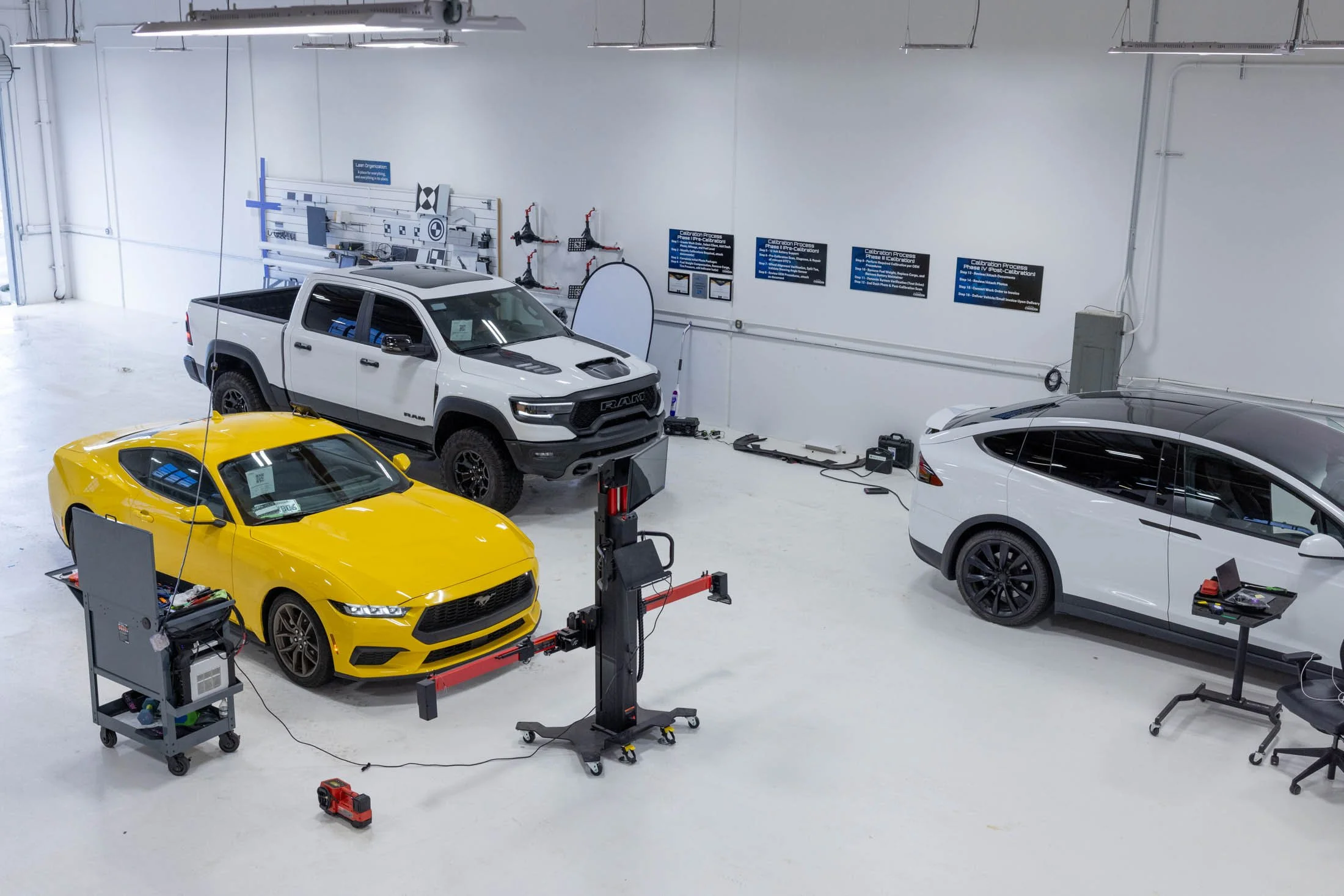
Abel Diagnostic Centers specialize in post-repair ADAS inspection and calibration, helping drivers confirm that blind spot monitoring and other safety systems are operating accurately again.
Abel focuses on:
OEM-centric calibration procedures
Certified level floors and controlled environments
Static and dynamic blind spot sensor calibration
Photo documentation and calibration reports
Same-day service when available
Abel’s role is verification and documentation, not fault-finding.
Schedule a Blind Spot Monitoring Inspection
If your blind spot monitoring is not working after body repairs, professional verification is the most reliable next step.
Serving Newbury Park, Thousand Oaks, Westlake Village, Camarillo, and surrounding Ventura County.
Bottom Line
If blind spot monitoring is not working after body repairs, the system is responding as designed — disabling itself when accuracy cannot be confirmed.
IIHS research, federal guidance, and industry repair standards all confirm that missed calibration or verification is a common cause, not sensor failure.
The good news: this is a fixable issue, and proper inspection and calibration can restore both system function and peace of mind.
Sources
I-CAR Repair Technology Summit — ADAS Sensor Considerations
https://rts.i-car.com/crn-748.htmlIIHS / BodyShop Business — Consumers Having Issues With ADAS After Repairs
https://www.bodyshopbusiness.com/iihs-consumers-having-issues-with-adas-after-repairs/NHTSA Technical Service Bulletin — Ultrasonic Sensor Alignment
https://static.nhtsa.gov/odi/tsbs/2016/MC-10090966-5448.pdf